

Valmiera demo site
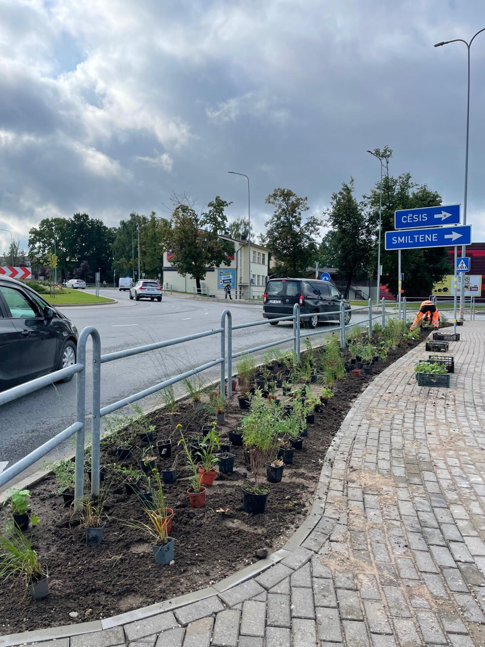
In Valmiera Municipality, the demonstration site is located at Cēsu Street 4, next to the Valmiera Integrated Library and Vidzeme University of Applied Sciences. The site was selected for the LIFE LATESTadapt project because of the excessive heat build-up during hot summer days and challenges with stormwater management during heavy rainfall. The large paved parking area lacks sufficient shade, contributing to the urban heat island effect and negatively affecting the local microclimate. The site is also a public area frequently visited by residents and visitors, making it suitable for demonstrating nature-based solutions in an urban environment.
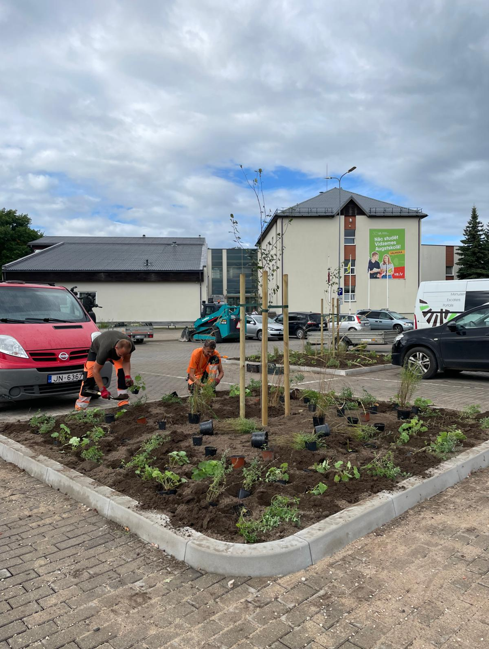
Within the LIFE LATESTadapt project, the site is being transformed through the integration of green infrastructure and innovative stormwater management solutions. During the first construction phase, green islands and planted areas were integrated into the parking lot, while a Smart city gully and Hydrorock blocks were installed to collect and store rainwater for plant irrigation. The second construction phase will further enhance the site with raised planting beds featuring a “dry river” designed to collect rainwater from the building’s roof.
The demonstration site showcases innovative solutions for integrating green infrastructure into existing urban spaces, helping cities adapt to heat waves and heavy rainfall. Several of the technologies introduced are new to the Latvian context and could be replicated in other cities. Construction is being carried out in stages, with the first phase completed and the second phase underway. The LIFE LATESTadapt project is co-funded by the European Union’s LIFE Programme.
About the first construction phase:
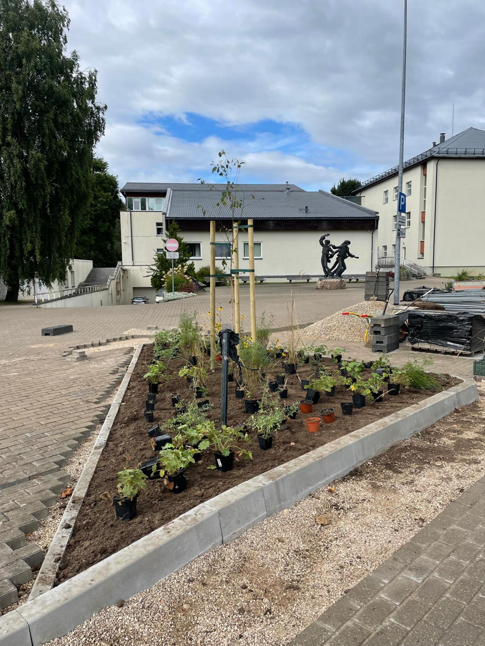
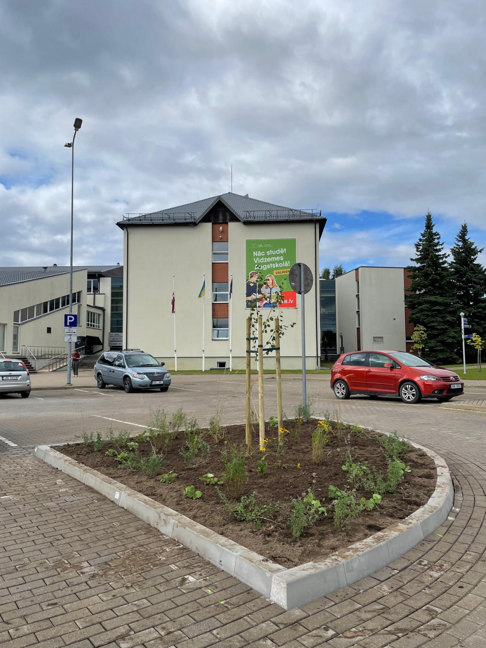
The first construction phase has been completed, with approximately 170 m² of green and permeable areas established. The works focused on transforming the paved parking area by introducing planted islands and flower beds that help reduce the urban heat island effect and improve local stormwater management.
The newly created planted areas incorporate innovative nature-based solutions for collecting and storing rainwater. The Smart city gully collects runoff from the parking area and directs it towards the planted areas, while Hydrorock blocks absorb and retain water, gradually releasing it to support plant irrigation. Excess water can overflow into the centralised stormwater drainage network.
These measures help make better use of rainwater, reduce the need for additional irrigation and introduce greenery into an area previously dominated by impermeable surfaces. The new planting areas also contribute to shading, lower surface temperatures and improve the overall appearance of the parking lot. The completed first phase demonstrates how nature-based solutions can be integrated into existing urban infrastructure to address the challenges of overheating and heavy rainfall.