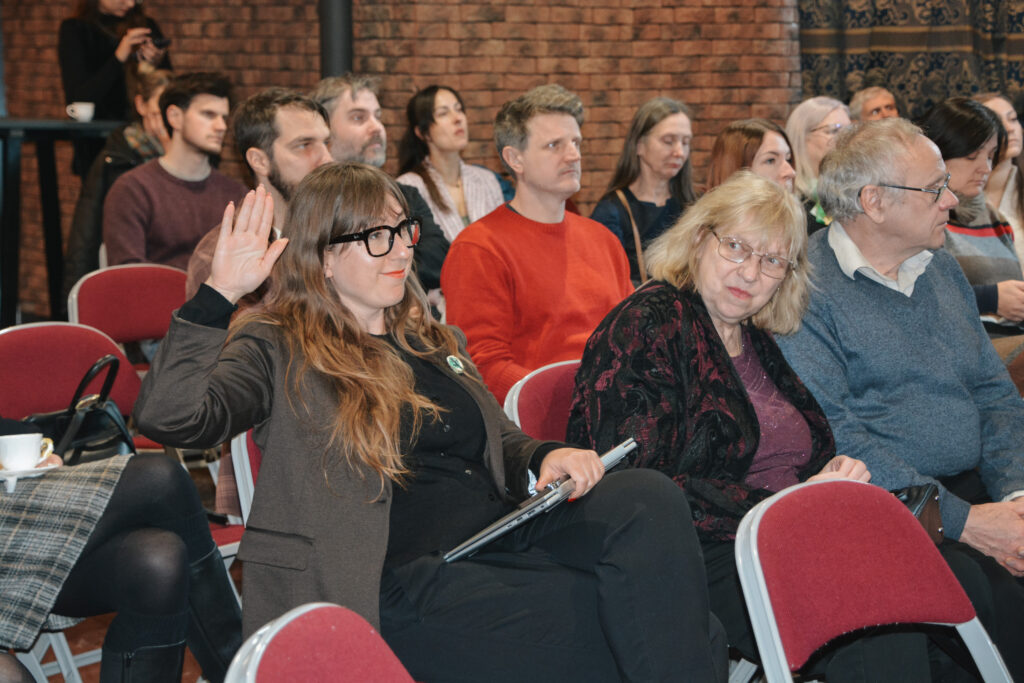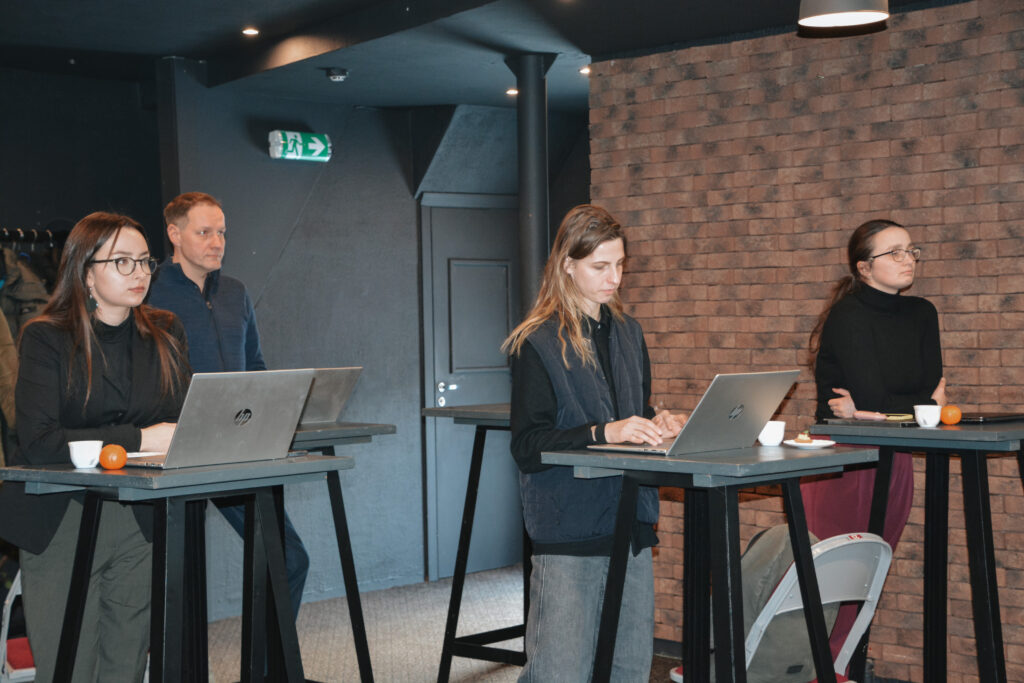

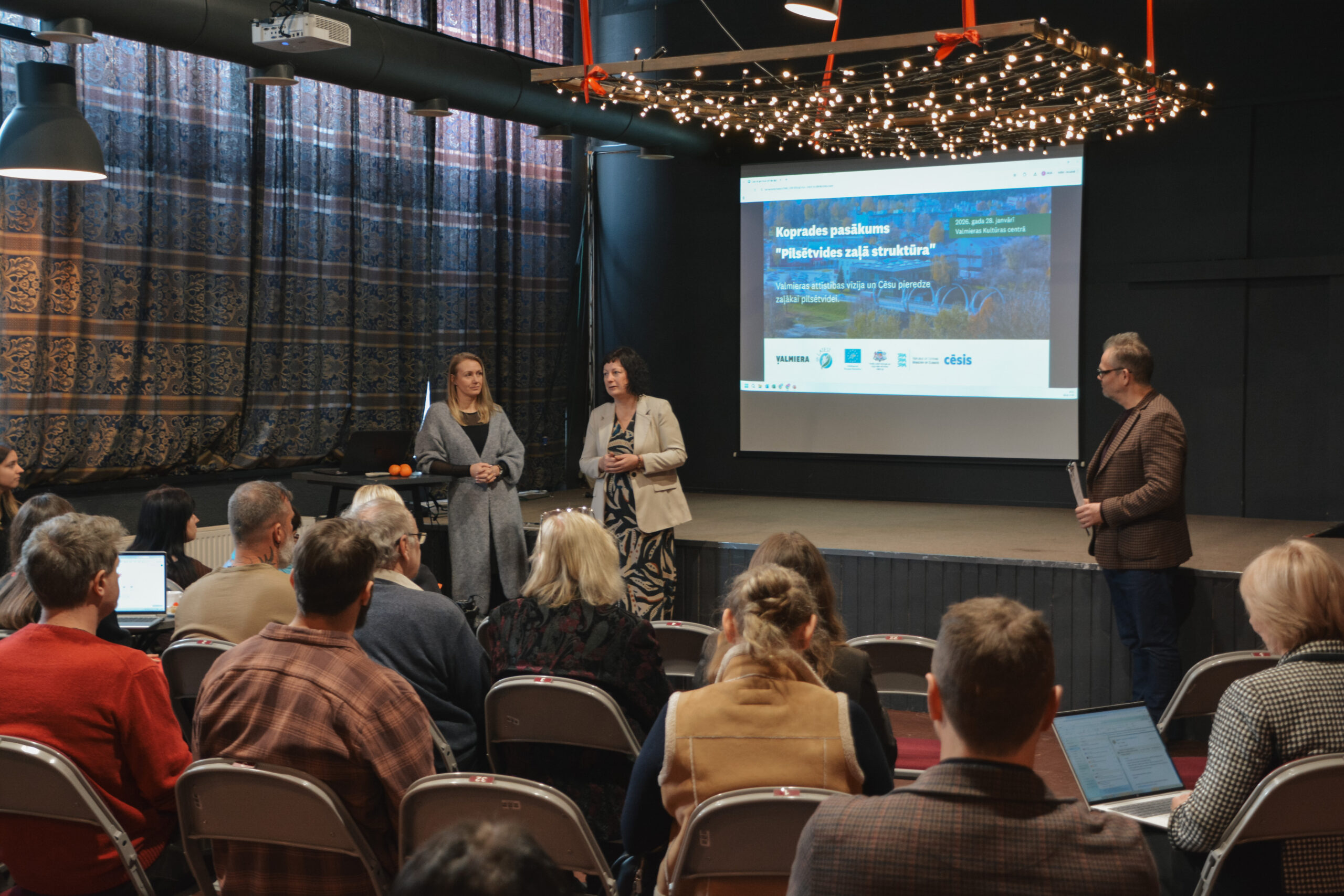
On 28 January, a large‑scale co‑creation event “Green Urban Structure” took place at the Valmiera Cultural Centre, bringing together residents, industry experts and local government representatives to jointly plan the development of the city’s green infrastructure. The event was part of the activities of the European Union’s LIFE programme project “LIFE LATESTadapt”.
The main goal of the event was to present the latest research findings to the public and promote discussion on urban climate resilience, the preservation of natural foundations and smart, nature‑based solutions.
In the first part of the discussion, representatives from Valmiera and Cēsis municipalities shared their practical experience in implementing green infrastructure. Valmiera highlighted both completed and planned projects, such as Strauta Street, the Vidzeme University of Applied Sciences square and the planned changes on Cēsu Street. Meanwhile, the experience of Cēsis showed that greenery in the city is not evenly distributed – heat‑island maps indicate problematic areas around the market, the stadium and the old town, where improvements are needed to enhance residents’ well-being. Cēsis also shared its innovative methods used during expert discussions, including artificial intelligence (AI) visual illustrations.
SIA “Grupa93” presented the concept for Valmiera’s green infrastructure development plan, based on a unique four‑ring system designed to create optimal “well‑being corridors”:
– Gauja Ring: Preservation and balancing of the natural foundation;
– Central Ring: A multifunctional environment for recreation and health;
– Neighbourhood Ring: Improvement of street space, giving priority to pedestrians and mobility;
– City Ring: Street‑space improvements and mobility solutions.
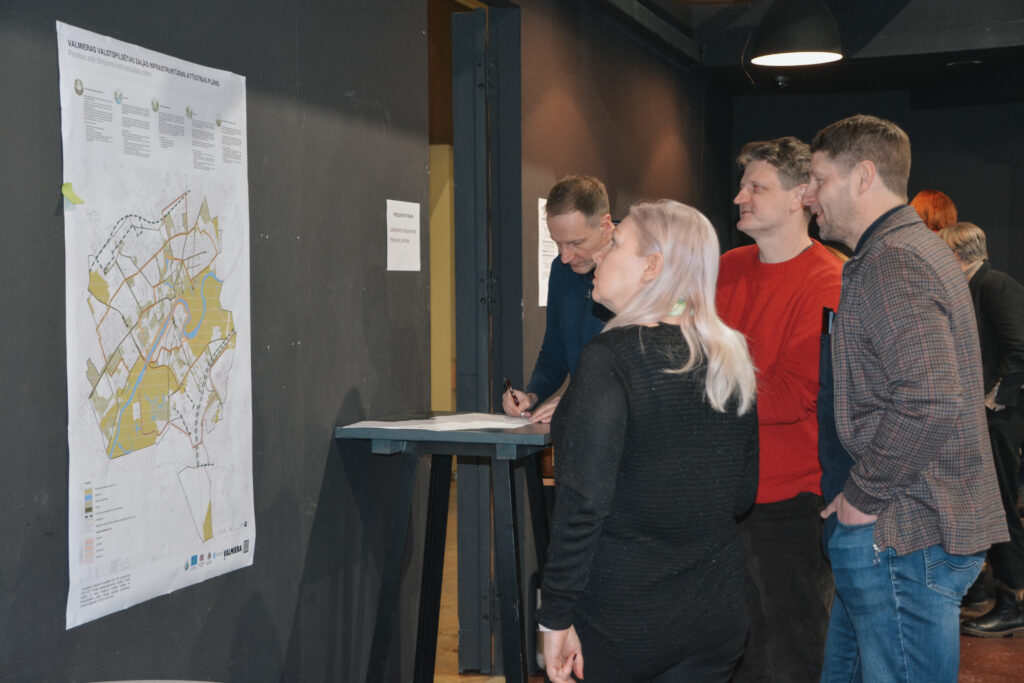
During the discussions, experts and residents focused on specific aspects of urban planning. Regarding stormwater management, it was recognised that instead of expensive treatment facilities, it is more effective to use bioswales and rain gardens, where plants naturally purify the water. Permeable surfaces were recommended for parking areas. Experts emphasised the need to “mix” tree species in urban areas (such as linden, hornbeam and black pine) to reduce the spread of plant diseases and stressed that the work should be entrusted to professional arborists.
One of the proposed solutions for creating space for green zones or cycling infrastructure was the introduction of one‑way streets in the city’s traffic system. “Society is changing – young people are increasingly choosing bicycles, so we need to create a suitable and safe environment, adapting standards to the specific scale and intensity of Valmiera,” participants concluded.
The event was organised as part of the LIFE programme project “LIFE LATESTadapt”, co‑financed by the Ministry of Smart Administration and Regional Development and Valmiera Municipality.